
Good, stable mental health can be significantly improved with the help of mental fitness. This ranges from relaxation exercises such as yoga or meditation to cognitive training that promotes concentration, memory or attention. A healthy diet and sufficient sleep also help to positively influence mental fitness.
A certain level of resilience can help you achieve your goals, better deal with difficult situations and improve your life in general. For example, if you are mentally fit, you can better manage stress and are able to positively influence your thoughts and emotions.
So far, we have described how the two concepts interact. But how can they be distinguished from each other?
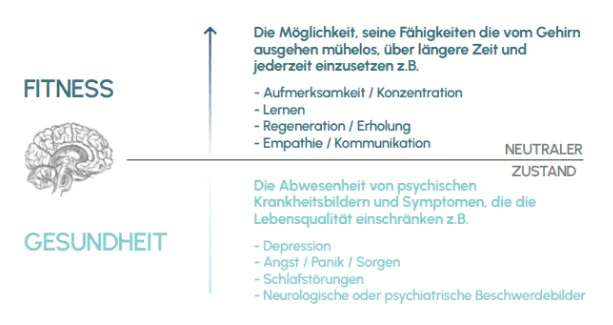
Mental health is the absence of mental illness and symptoms that limit the quality of life, e.g. depression, anxiety / panic / worry, sleep disorders, neurological or psychiatric conditions.
Mental fitness, on the other hand, enables us to use our cognitive abilities effortlessly, over longer periods and at any time. A good attention & concentration span, learning, regeneration & recovery, empathy and communication – all of these are examples of mental fitness.
Our work aims to improve people’s awareness and knowledge of their mental health and fitness. Through targeted interventions and measurements, we help you to improve your daily performance. One option in this area is neurofeedback training, which we offer at our practice. Our focus is on positive and practical approaches to support mental health.
This approach to training leads to powerful and lasting improvements in mental fitness and health over the long term. We are proud to contribute to closing the mental fitness gap and making a real difference in your life.