
The symbiosis of mental and physical fitness – meaning, definition and connection. If nothing else, the coronavirus pandemic and the current flood of crisis news from around the world have taught us that physical fitness is not the only thing that matters for a healthy life. For some years now, mental and psychological fitness has been gaining more and more importance – and rightly so! It is high time we looked at our health from a holistic perspective. This means considering and training not only physical activity and a healthy diet, but also factors such as sleep hygiene, resilience, mindfulness and mental health in general.
Definition of physical and mental fitness
Physical fitness refers to your current level of physical performance in terms of strength, endurance, speed, flexibility and coordination.
Mental fitness, on the other hand, covers various aspects such as quick comprehension, good concentration, a long attention span and, generally speaking, the performance of the brain.
Now that the basics have been clarified, the question remains to what extent physical and mental fitness influence or depend on each other.
It is obvious that a poor physical condition also has a negative effect on the psyche. If you are in pain or physically limited in some way, you are usually not in the best of moods, but tend to feel rather down or irritable.
On the other hand, psychological complaints can also lead to negative physical states, because body and mind are closely linked.
In the case of burnout, i.e. a state of mental exhaustion, there is for example a risk of adrenal insufficiency if this condition persists over a longer period of time. This is caused by excessive production of the stress hormone cortisol, which is produced in the adrenal cortex.
This example shows that a person’s mental state can have a direct impact on their physical health and performance. This is another reason why we at brainboost place particular emphasis on strengthening mental fitness and on paying more attention to preventive measures in this area.
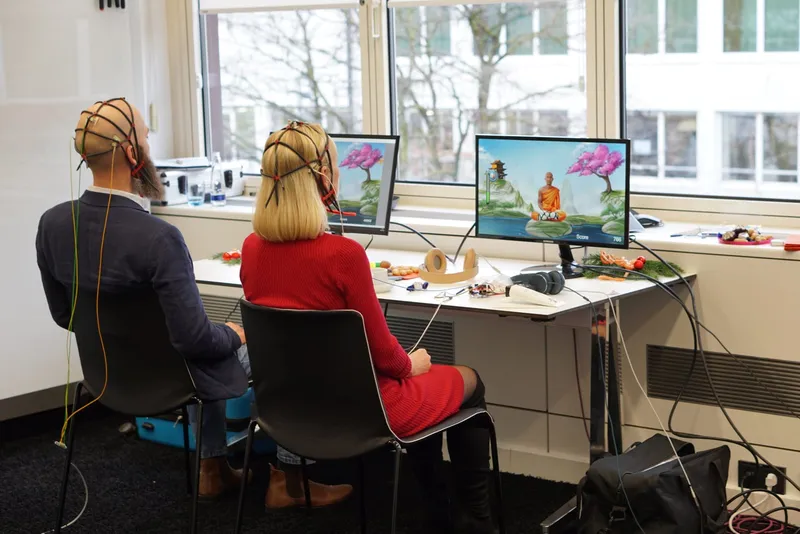
For example, as part of neurofeedback, we use specific training protocols aimed at promoting relaxation in order to strengthen this important mental resource. Here, the active electrode is placed at position Pz (parietal – central), and the activity of the slow alpha frequencies is either trained down with eyes open or trained up with eyes closed.
When the mind is relaxed, this also has an immediate positive effect on the body, such as less muscle tension, better sleep, a stronger immune system and many other benefits.
Have you perhaps experienced for yourself how your psychological state directly affects your physical fitness, or how your physical condition affects your mental fitness?
Psychosomatics affects more people than previously assumed. Read our next article to dive even deeper into this topic: Psychosomatic illnesses: between mind and body (in German).